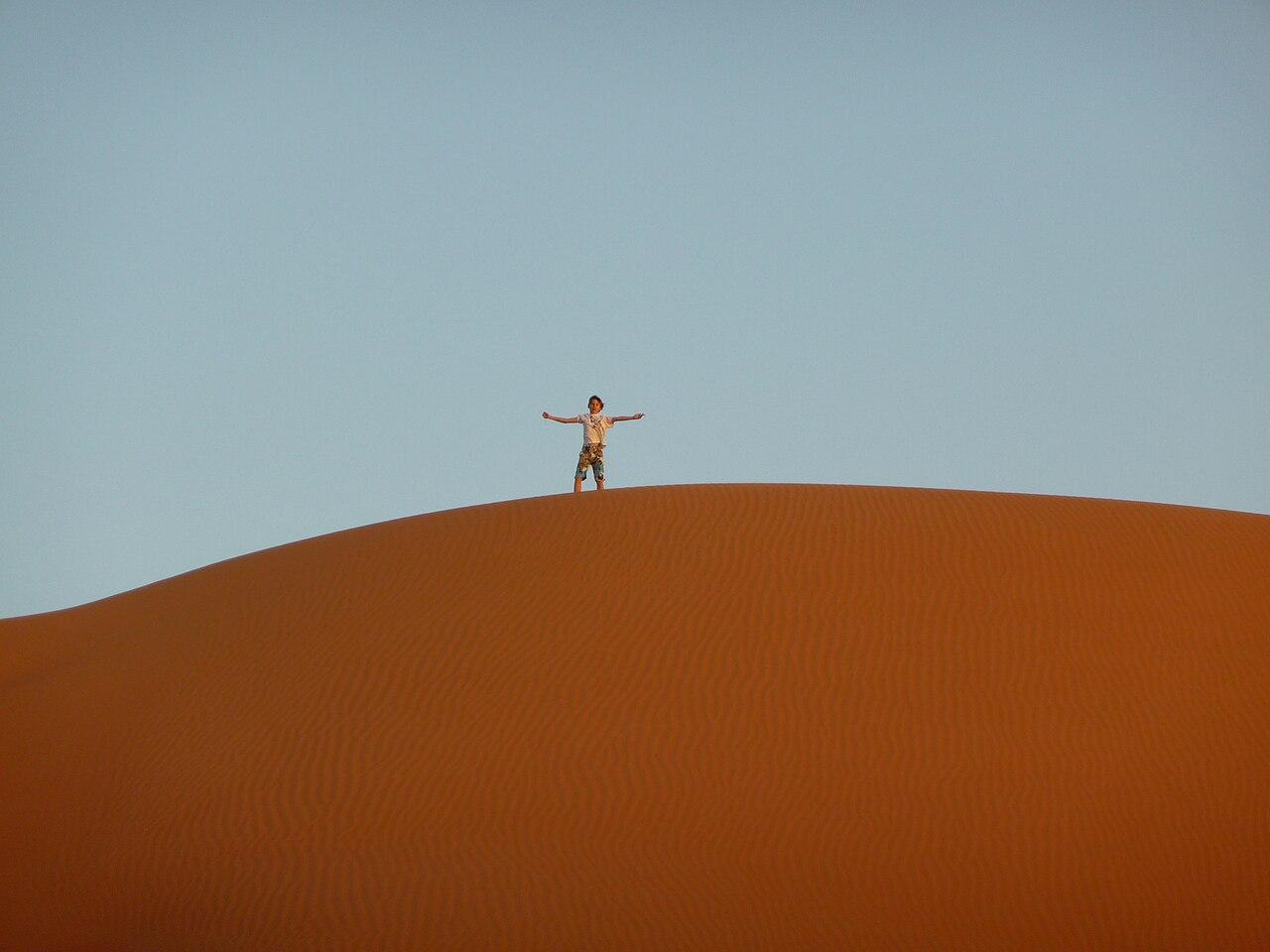
Photo: Paul IJpelaar, CC BY 3.0
Run 165 km across Oman's Wahiba Sands to the Arabian Sea, carrying your food
Al Wasil to the Arabian Sea, Wahiba Sands, Al Sharqiyah, Omanrun by Oman Desert Marathon
Five self-sufficient stages over 165 km of the Wahiba Sands, from the old fort of Al Wasil to the shore of the Arabian Sea, with a 45 km night stage.
You arrive on 8 January for registration and kit checks, then run five stages: 40 km from the historic fort of Al Wasil, 29 km through the desert forest, 30 km into the heart of the sands, a 45 km night stage and a last 21 km to the finish on the Arabian Sea. You carry your kit, sleeping bag and food in a pack of 10 to 15 kg; the organisers give bottled water about every 10 km and at camp, and big open-sided tents with carpets over the sand. The 100 km ODM Hike walks the same five-stage format.
The catch
Outside the cut-off on any stage means disqualification, and food or help from anyone outside the organisation costs a 3-hour penalty. No medical certificate and fresh ECG, no start. The US government tells Americans to reconsider travel to Oman because of the regional conflict; the UK advises against no part of the country.
To take part: 18 or over at the start. A medical certificate signed by a doctor, uploaded by 10 December 2026, and an ECG done less than 30 days before the start (after 11 December 2026), the signed original shown at the checks. Bring your own sleeping bag and pad.
Getting there
Fly to Muscat (MCT). The organisers pick runners up at the airport on arrival day and take them back to Muscat airport on 14 January.
Flying time is a great-circle estimate, not a timetable.
How sure we are
Checked 27 Nov 2026 on the operator's own page: Oman Desert Marathon: 165km ODM Classic.
Questions
How much does it cost?
USD 1,680 per runner at the regular rate; USD 1,470 for previous participants, USD 1,380 each in groups of 4 or more. Included: Race entry, the airport transfer with lunch and dinner on arrival day, breakfast before stage 1, tents at each camp, bottled water at checkpoints and at camp, and the transfer back to Muscat airport.
When can you do it?
Once a year in January. 2027 (12th edition): arrival 8 January, stages 9 to 13 January, departure 14 January. Next date: 8 to 14 Jan 2027 (Oman Desert Marathon 2027, 165 km Classic).
How do you book it?
Register through Register Now on the ODM Classic page; the closing date for 2027 entries was still to be confirmed.
How do you get there?
Most people fly to MCT. The organisers pick runners up at the airport on arrival day and take them back to Muscat airport on 14 January
What is the catch?
Outside the cut-off on any stage means disqualification, and food or help from anyone outside the organisation costs a 3-hour penalty. No medical certificate and fresh ECG, no start. The US government tells Americans to reconsider travel to Oman because of the regional conflict; the UK advises against no part of the country.
Where
Al Wasil to the Arabian Sea, Wahiba Sands, Al Sharqiyah, Oman (Middle East). More in Oman · See what is near it on the map
Like this
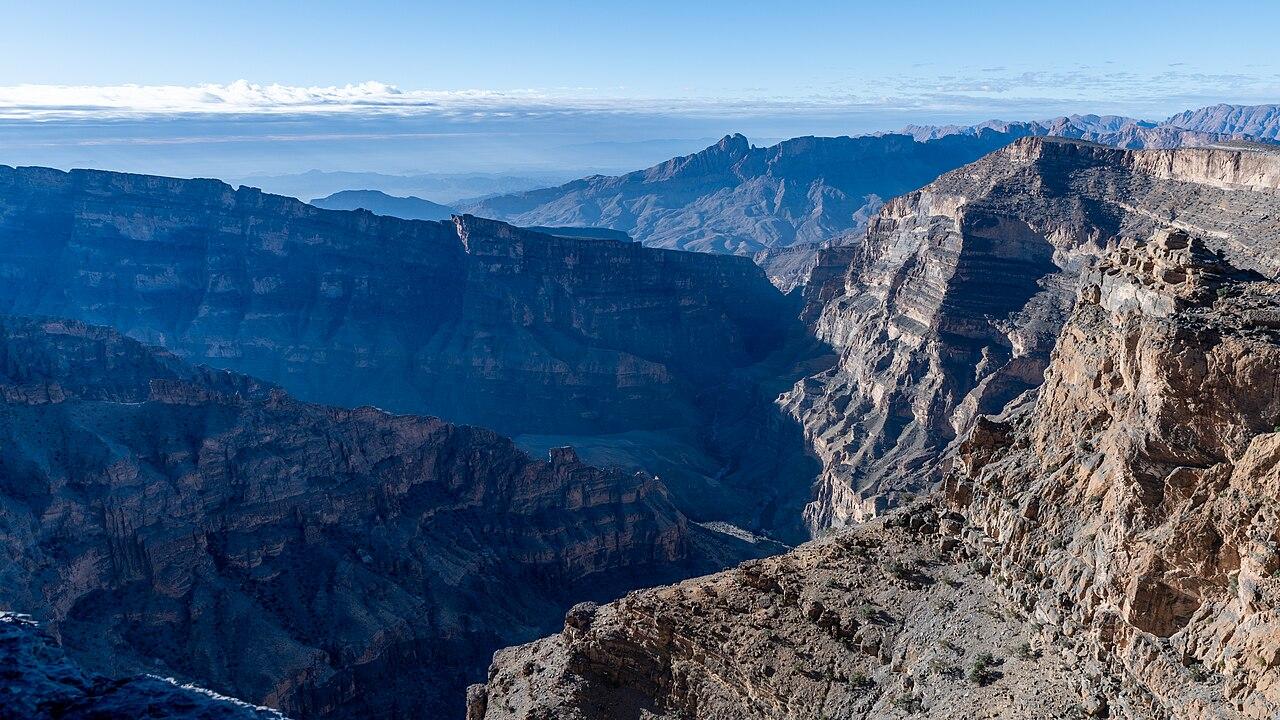
Cross Oman's Western Hajar on foot from Wadi Bani Awf to Jebel Shams, bivouacking on the ridge
Five days across the Western Hajar, from the gorges of Wadi Bani Awf over the main ridge to Jebel Shams, Oman's highest mountain, with two nights bivouacked high.
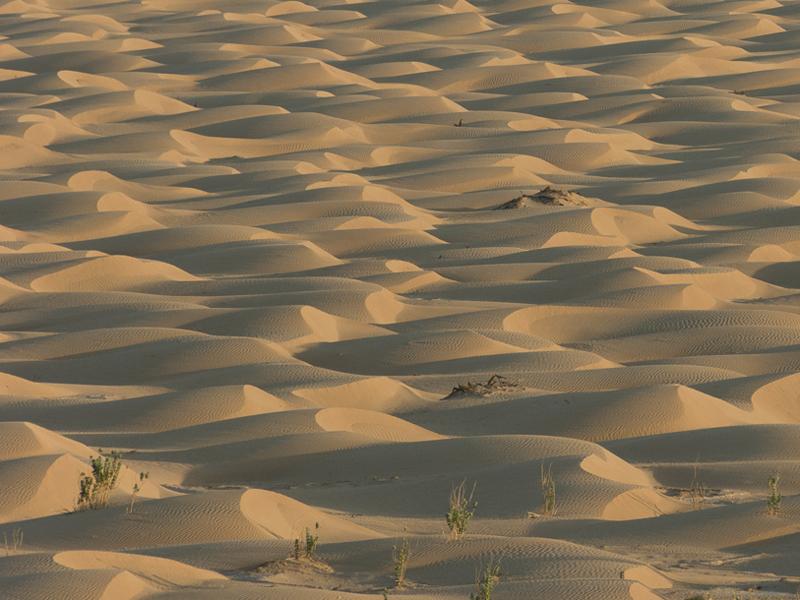
Walk seven days through the dunes of the Empty Quarter, eight nights camped in the sand
Eight nights camped in the Rub al Khali north of Salalah, walking four to six hours a day across the dunes of the world's largest sand sea.
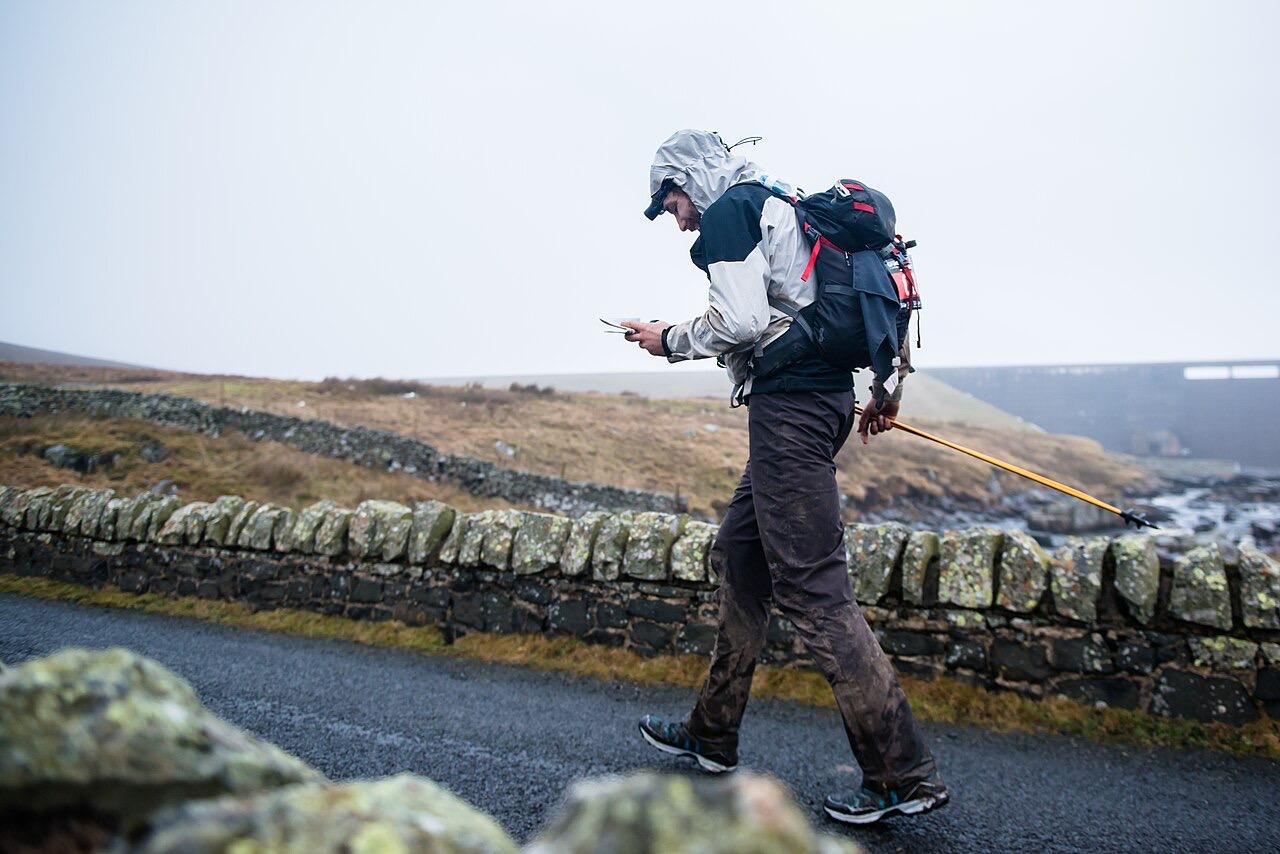
Race 268 miles of the Pennine Way non-stop in January
The Montane Winter Spine: 268 miles from Edale to Kirk Yetholm along the Pennine Way in British winter, non-stop, with a 156-hour limit.
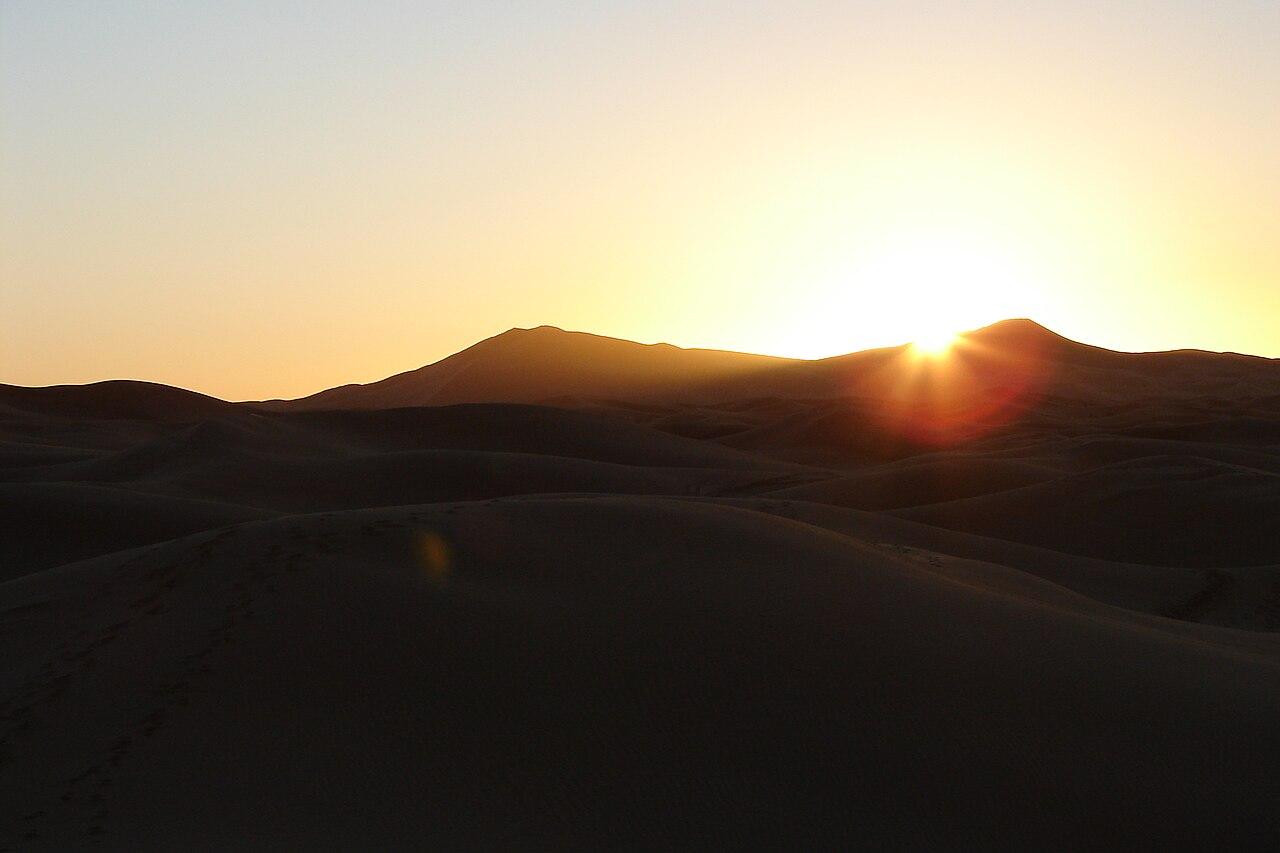
Run 100 miles through the Moroccan Sahara without stopping in the MDS Ultra
The Marathon des Sables' 40-hour format: 160 km (or 100 km) of dunes and plateaus on the MDS route, carrying all your food and running through the night.
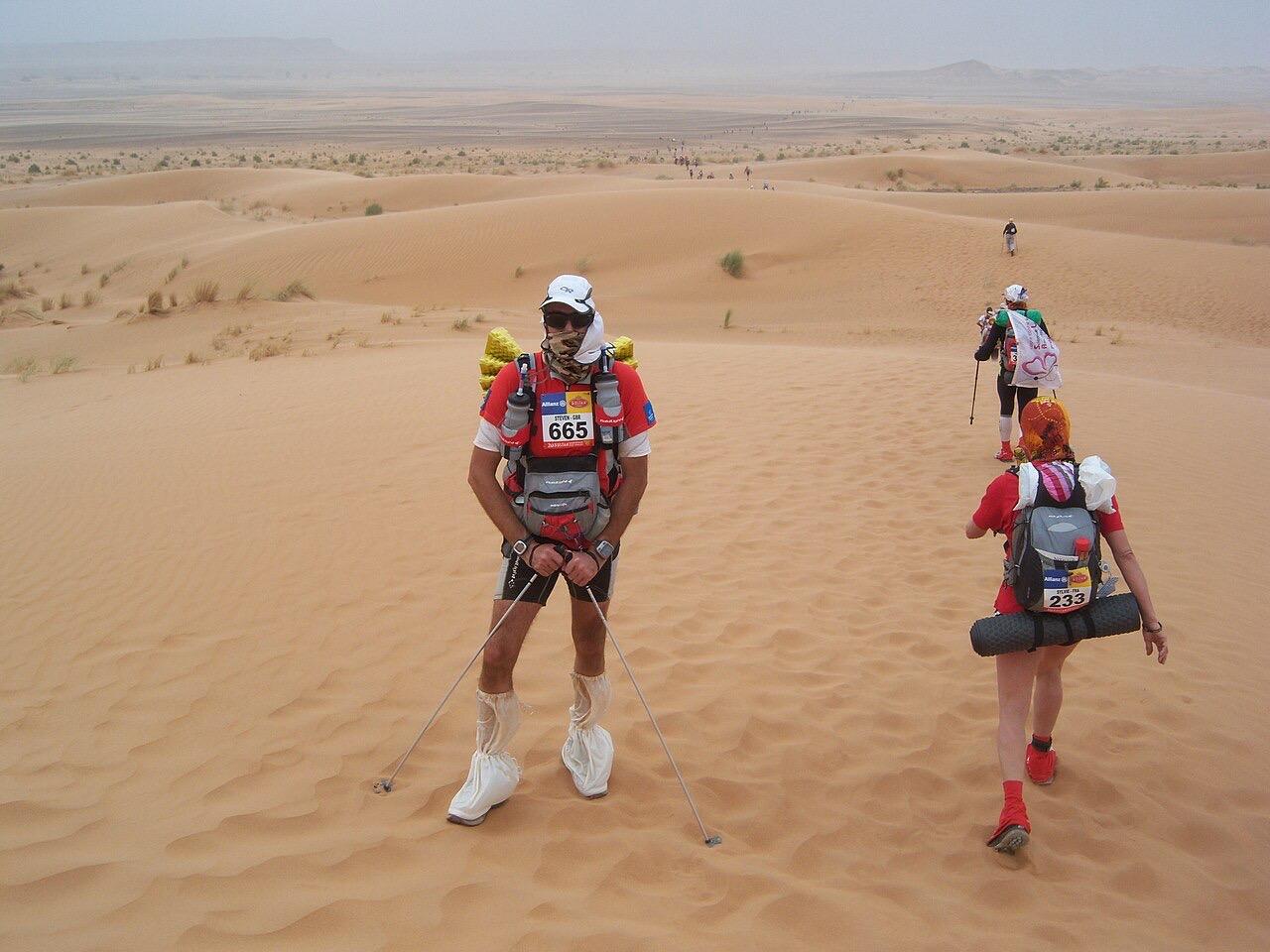
Cross 250 km of the Sahara with your food on your back in the Marathon des Sables
Six stages and about 250 km across the Moroccan Sahara, run or walked, self-sufficient for a week with all your food and kit in your pack.
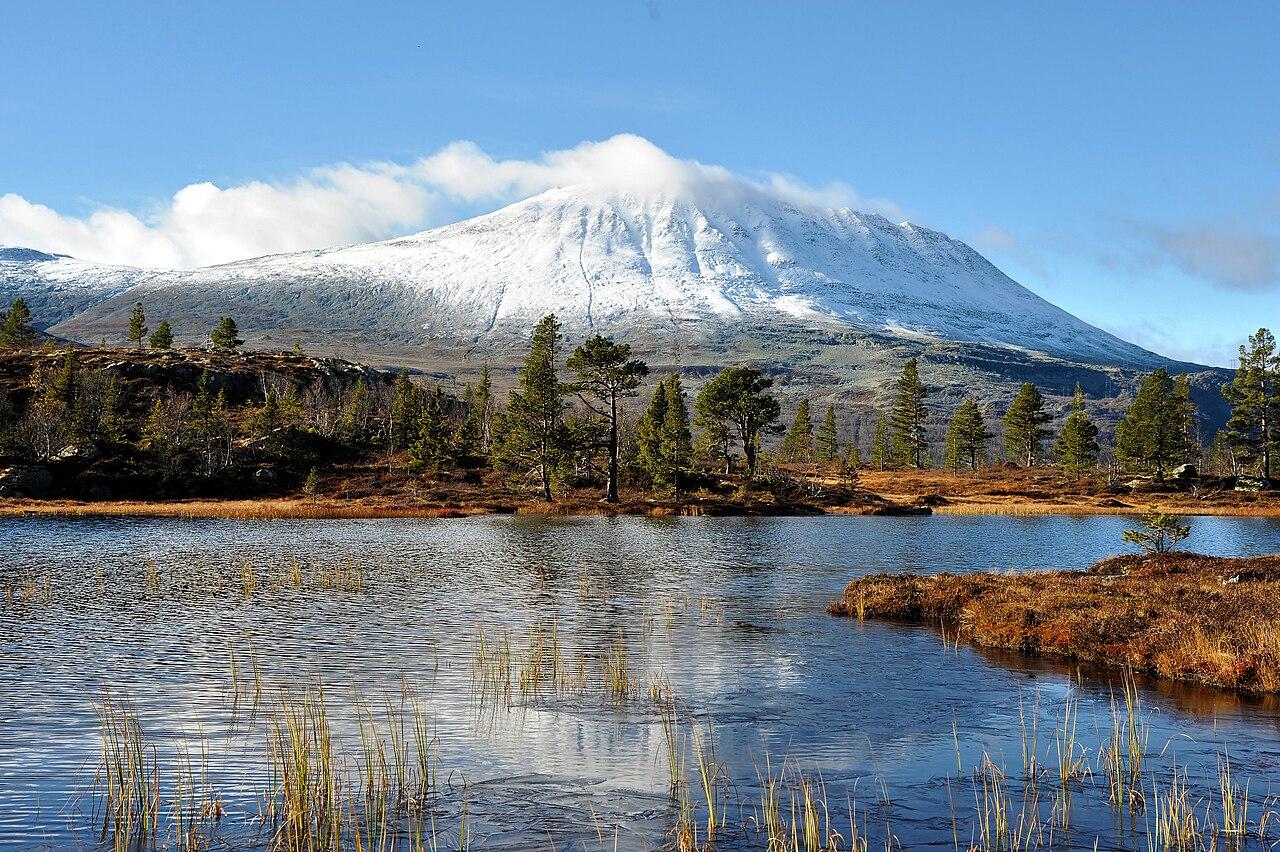
Jump off a ferry into the Hardangerfjord at 05:00 and race 226 km to the top of Mount Gausta in the Norseman
The original extreme triathlon: a jump from a ferry into the fjord at Eidfjord at dawn, then 226 km and more than 5,000 m of climbing to the summit of Mount Gausta, with your own support team beside you.