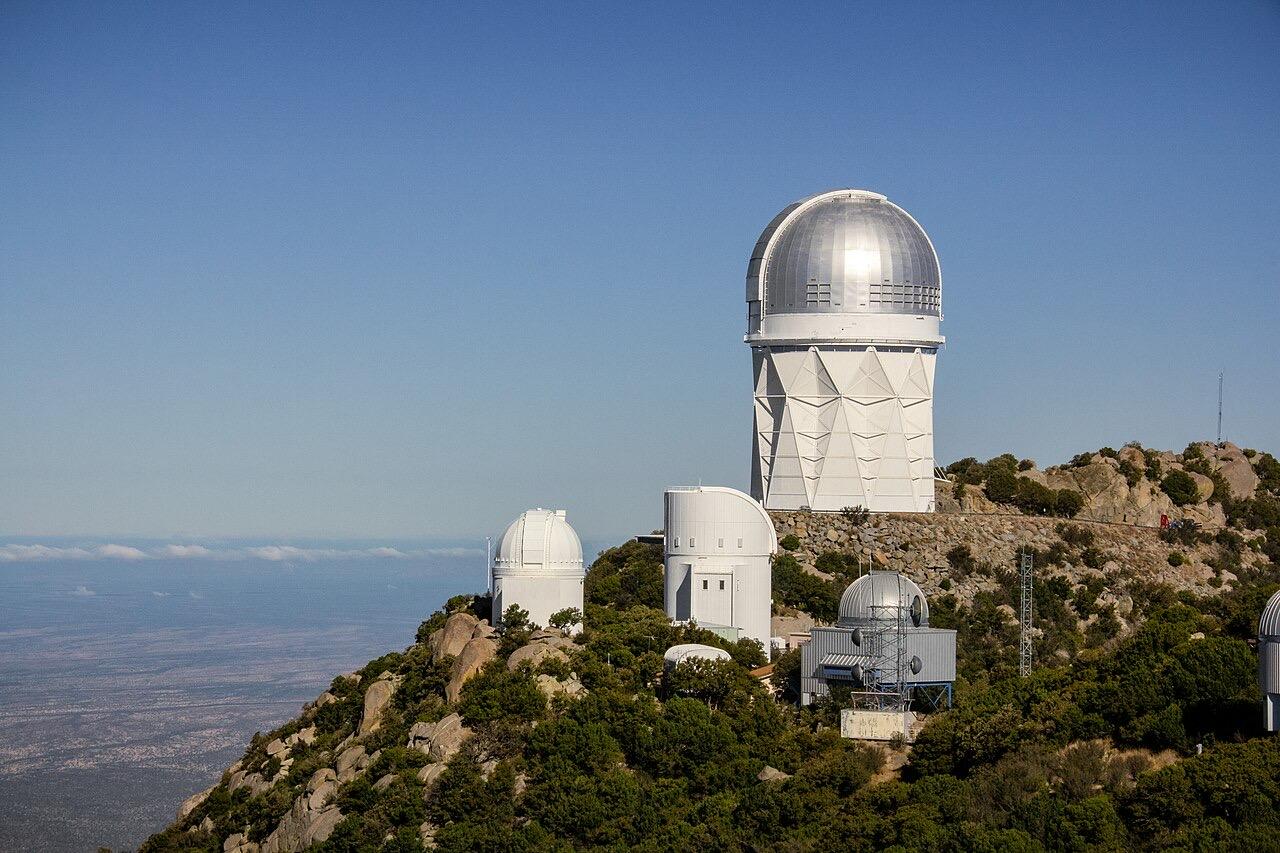
Photo: KPNO/NOIRLab/NSF/AURA/P. Marenfeld, CC BY 4.0
Spend a night as a visiting astronomer on Kitt Peak, at the telescope until dawn
Kitt Peak National Observatory, Quinlan Mountains, southwest of Tucson, Arizona, United Statesrun by Kitt Peak Visitor Center (NSF NOIRLab)
Sleep at Kitt Peak National Observatory and run one of its visitor telescopes through the night with an operator, observing and imaging deep-sky objects.
You arrive at the Visitor Center on the 7,000 ft summit in the afternoon, meet your telescope operator and settle into an on-site dormitory room. After dinner and sunset, one of the four Visitor Center observatories (telescopes of 0.4 to 0.6 m) is yours for as long as you can last, for visual observing or imaging from your own list or the operator's, with at most one other party sharing it. Three meals are included, and you leave the next morning, never before sunrise and by 11:00 at the latest.
The catch
Clouds decide the night: a weather call around 10:00 on the day offers a free reschedule, with no refund, if conditions look poor. You must be at the base of the mountain by 15:00, cannot leave before sunrise, and follow strict lighting rules so the research telescopes are not disturbed.
To take part: Up to 4 guests; not recommended for children under 12.
Getting there
Fly to Tucson International (TUS). About 1.5 h by road southwest of Tucson.
Flying time is a great-circle estimate, not a timetable.
How sure we are
Checked 25 Nov 2026 on the operator's own page: Kitt Peak National Observatory: Nighttime Programs.
The price was still stated on that page on 27 Nov 2026 (our automatic re-read).
Questions
How much does it cost?
USD 1,300 for one guest in a single room; USD 1,500 for two sharing a room; USD 2,000 for three or four (two rooms at most). Telescope for the night and 3 meals included.. Included: Telescope and operator for the night, dormitory room, 3 meals
When can you do it?
Runs for a set number of nights around each new Moon, all year. The booking calendar on 25 Nov 2026 listed nights from 3 to 12 Dec 2026, 2 to 13 Jan, 1 to 12 Feb and 2 to 13 Mar 2027. July and August are usually the least favourable months because of the monsoon. Next date: 3 to 12 Dec 2026 (Nights listed around the December new Moon).
How do you book it?
Book a night through the Kitt Peak Visitor Center's online booking (FareHarbor); email kpvc@noirlab.edu first if you have a specific observing or astrophotography plan. The visitor center recommends booking at least a month ahead.
How do you get there?
Most people fly to TUS. About 1.5 h by road southwest of Tucson
What is the catch?
Clouds decide the night: a weather call around 10:00 on the day offers a free reschedule, with no refund, if conditions look poor. You must be at the base of the mountain by 15:00, cannot leave before sunrise, and follow strict lighting rules so the research telescopes are not disturbed.
Where
Kitt Peak National Observatory, Quinlan Mountains, southwest of Tucson, Arizona, United States (North America). More in United States · See what is near it on the map
Like this
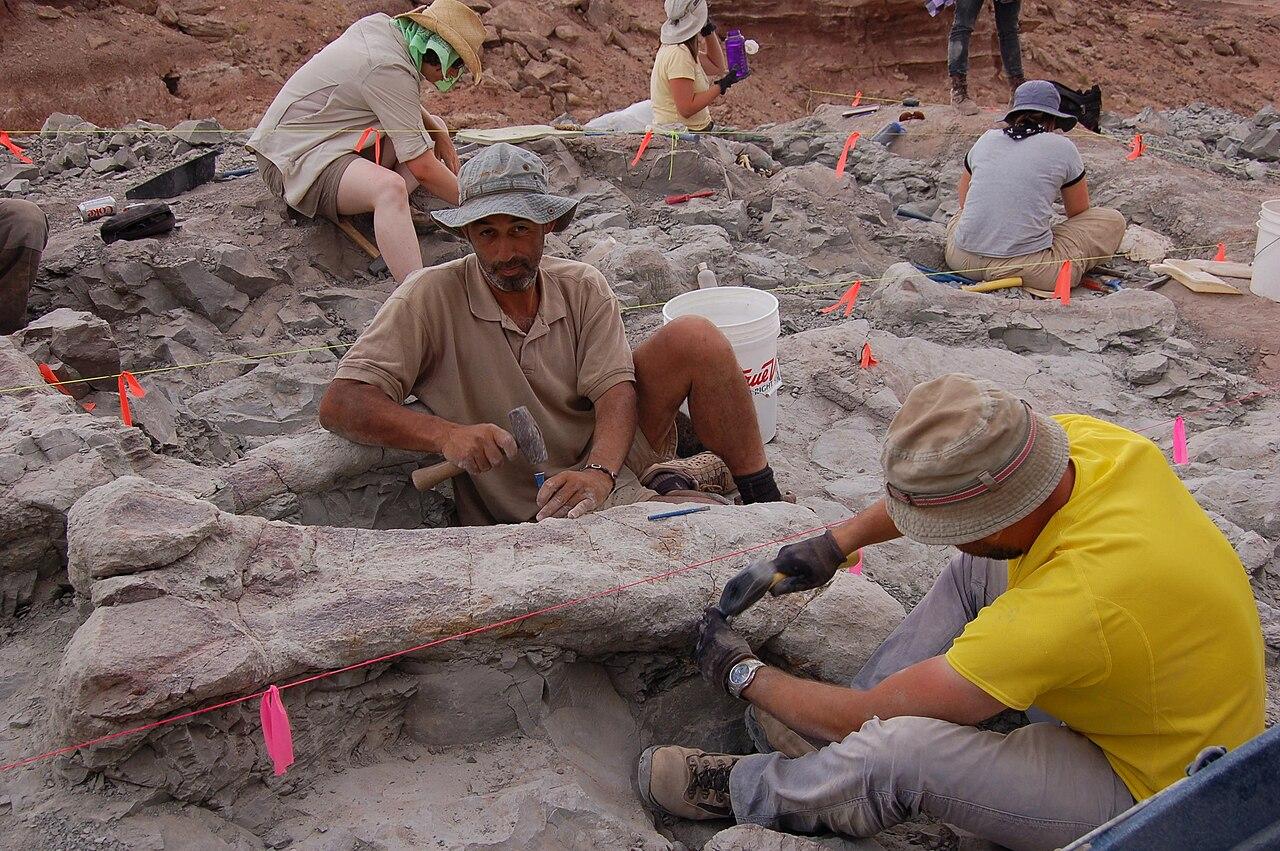
Dig for Jurassic dinosaur bones for a week in Montana's Bighorn Basin
A week on a working fossil dig for the late Jurassic Morrison Formation, excavating beside paleontologists in the badlands of southern Montana and northern Wyoming.
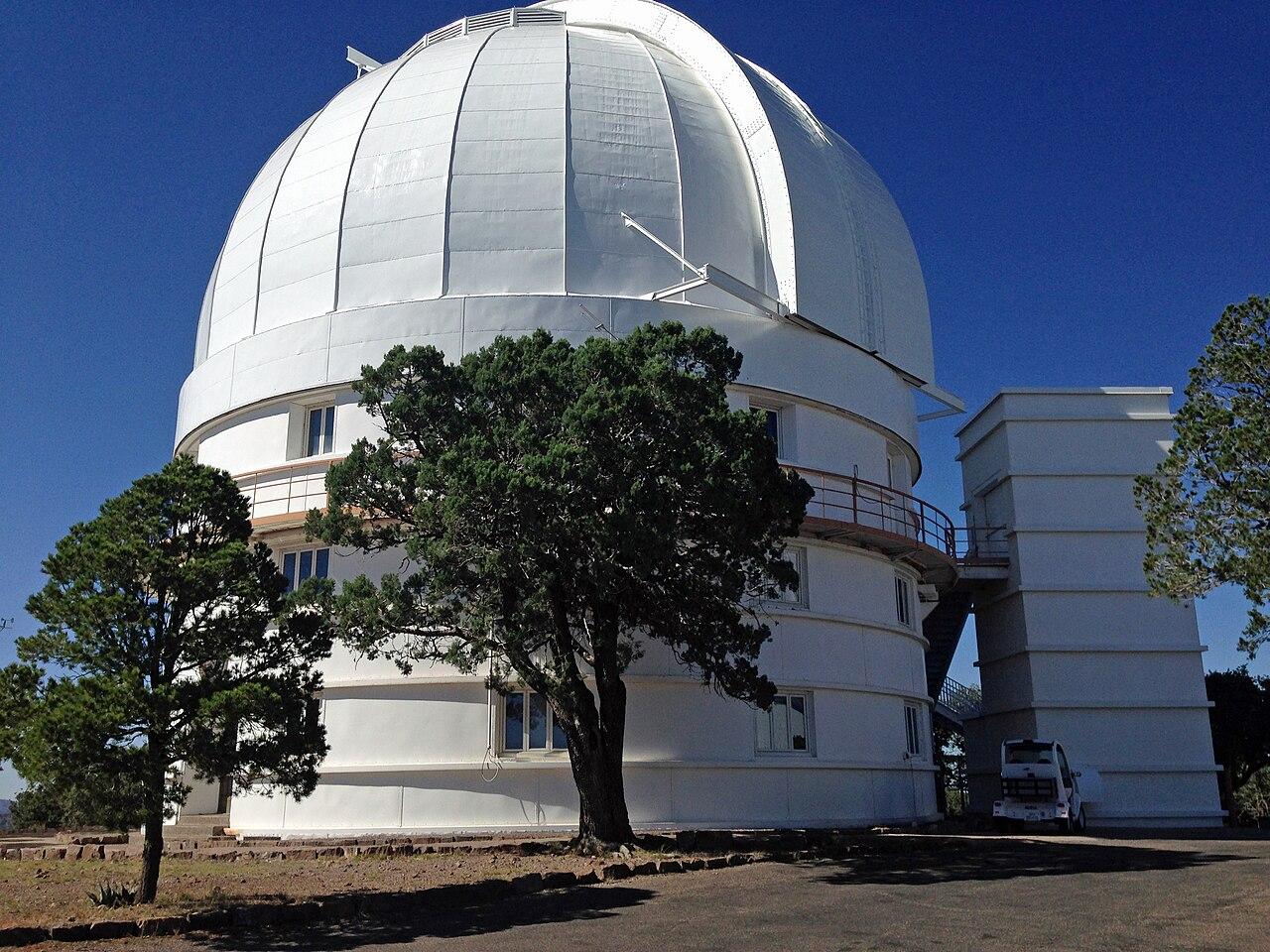
Look through the 82-inch Otto Struve research telescope on a McDonald Observatory night
On select nights McDonald Observatory in West Texas lets about 15 people observe through its 82-inch (2.1 m) Otto Struve Telescope, a research tool since 1939.
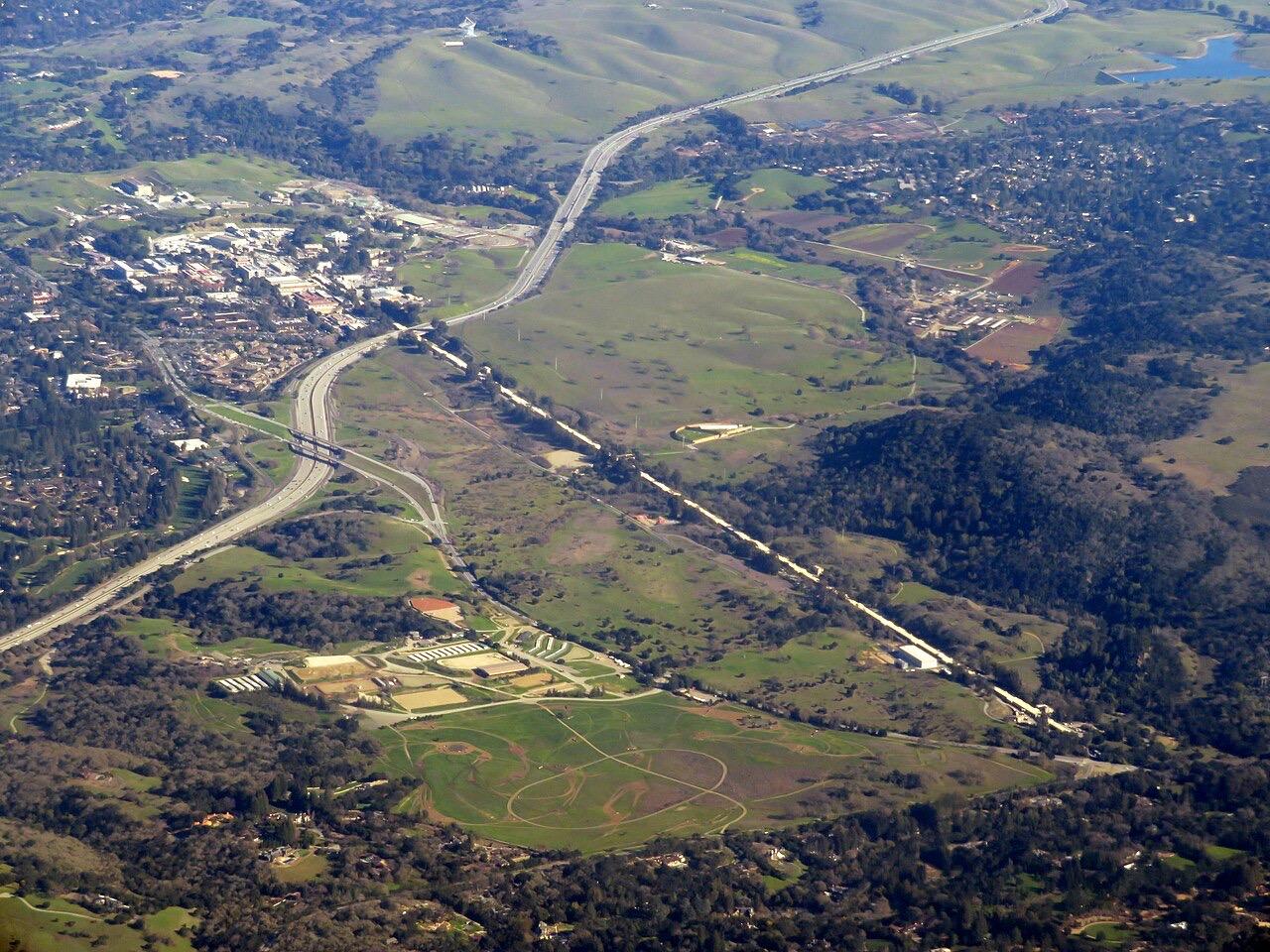
Tour SLAC's 2-mile linear accelerator and its X-ray laser halls
A free 90-minute tour of SLAC in Menlo Park, California, along its 2-mile linear accelerator to the experiment halls of the LCLS X-ray laser.
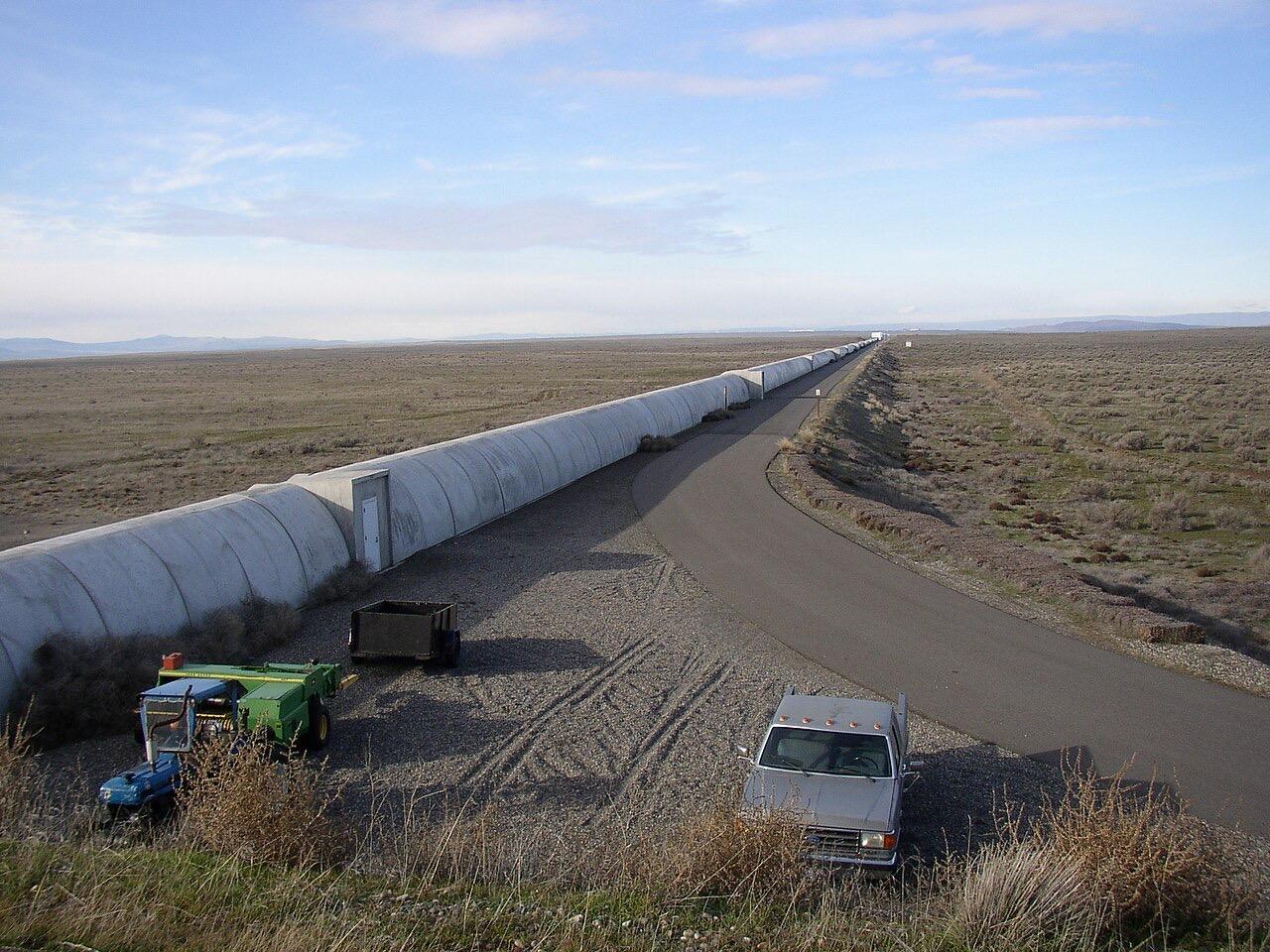
Walk into the control room of the LIGO Hanford gravitational-wave detector
A free Saturday tour of LIGO Hanford in Washington: its control room, a view down both 4 km arms, and a talk from the people who run the detector.
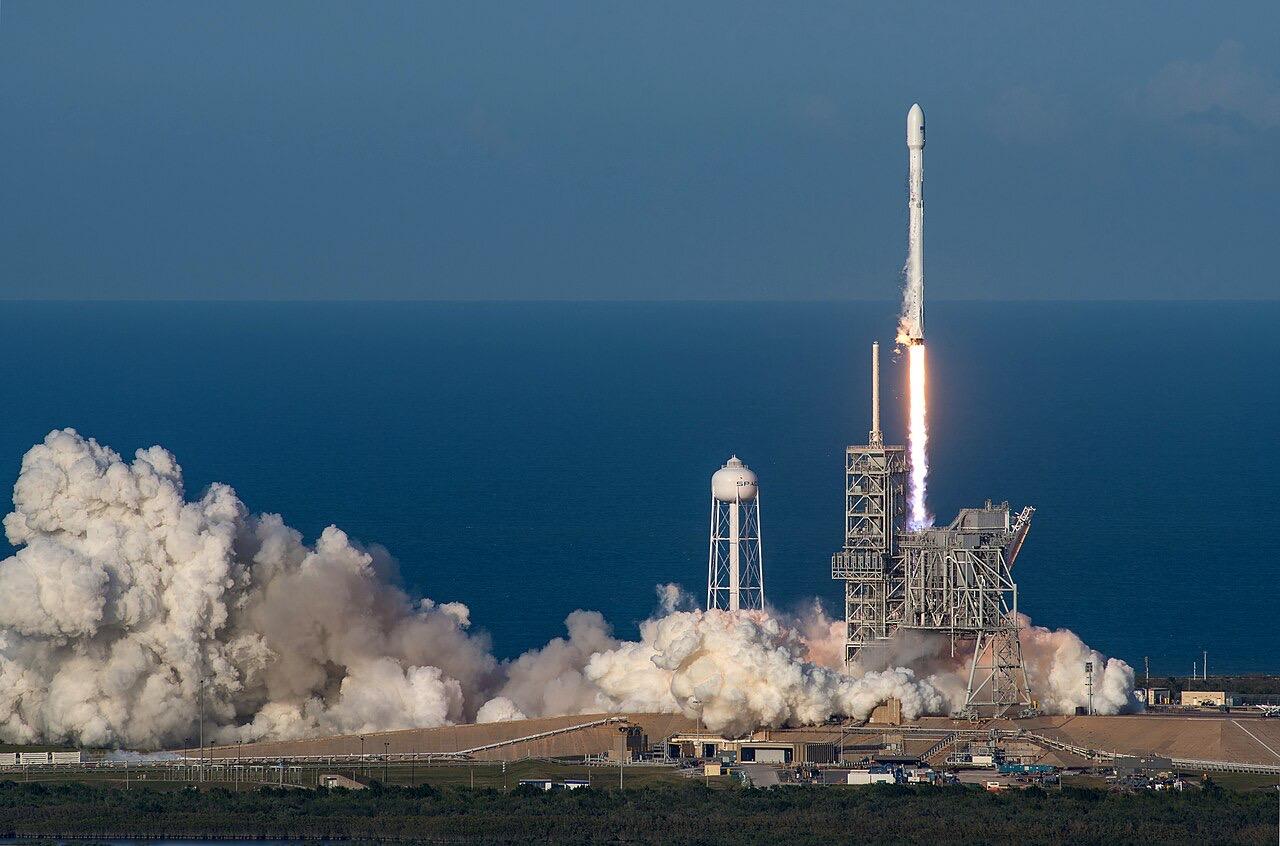
Watch a SpaceX rocket lift off from the Kennedy Space Center viewing areas
SpaceX launches from Cape Canaveral every few days, and the visitor complex's viewing areas, about 10 km from the pad, are the closest public seats.
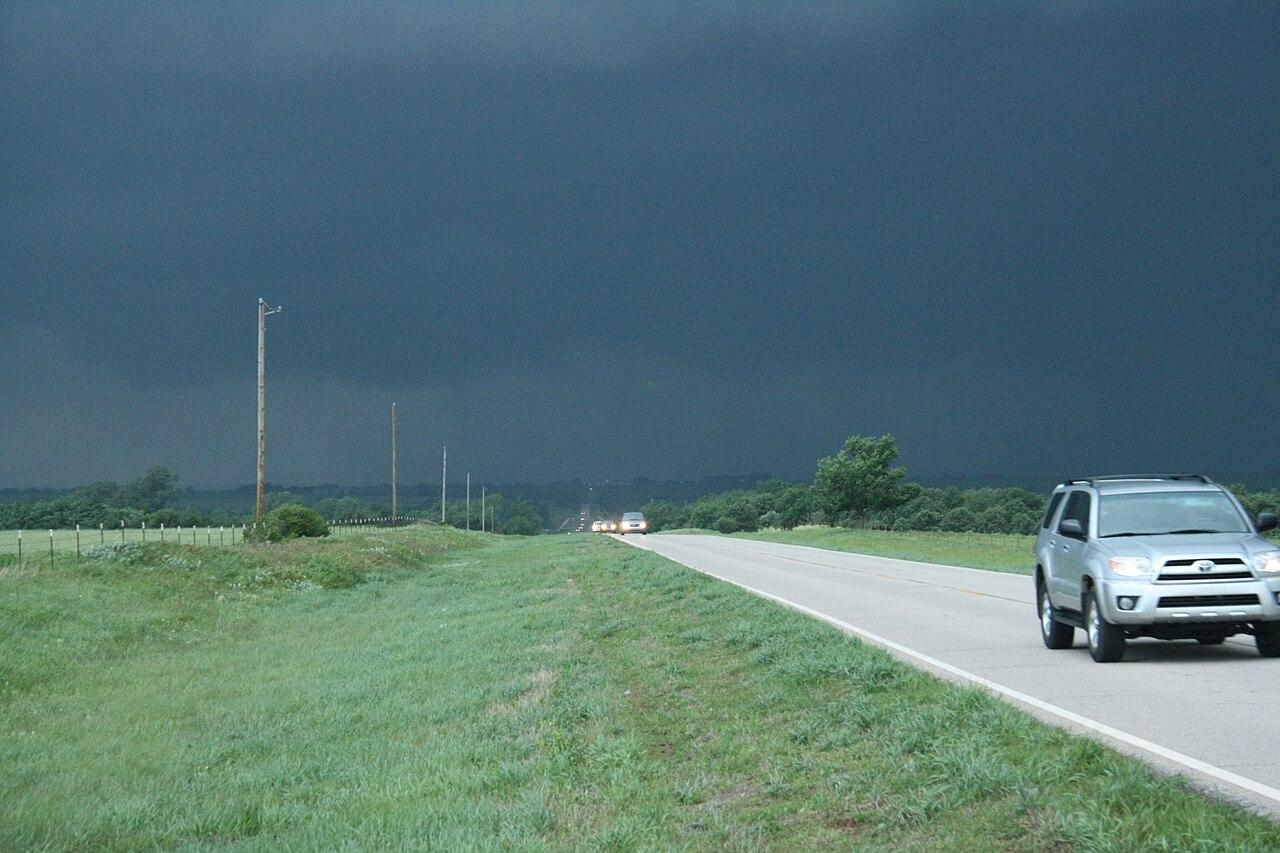
Chase supercells and tornadoes across the Great Plains
A week in a chase van across Tornado Alley, going after supercells, very large hail and tornadoes with a team in its 30th season.